“Interesting, but we need to think about it.”
Hypothesis: the value isn’t obvious yet.
For independents, experts & businesses with an established offer
Your customers know why
they don’t buy. Do you?
Within 72 hours, we identify the visible points that can slow your prospects’ decision, with evidence, the first fix to test, and what to check with real buyers. Then, if you want, we build the journey that takes them all the way to a decision.
Free · No data access · No commitment · Review ready within 72hSometimes the obstacle is not the product
A good offer can still
lose the sale.
What they say
“We’ll get back to you.”
What it may hideI still don’t see why I should switch.
Hypotheses, not certainties: the Decision Diagnostic pinpoints what your journey leaves unanswered, and what to check with real buyers.“Send us a deck and we’ll get back to you.”
Hypothesis: the message creates no urgency.“Your competitor seems a better fit for us.”
Hypothesis: your difference remains invisible.The Decision Diagnostic · free · 72h
Show me what
I can’t see.
We go through your business like a prospect who doesn’t know you, then compare it with your most visible competitor. You walk away with the visible frictions, their proof, and what to fix first.
PointYouCompetitor
- Visibility
- Click-through
- Landing
- Recognition
- Contact
- Response
01
The 6-point review
You and your most visible competitor, measured the same way, on the same day.
Friction 1 / 3
Proofscreenshot23/09link
02
Up to 3 documented frictions
Three findings at most, each with its proof: a screenshot, a date, a link. Not twenty “ideas”. What you see in the report is simple; the work of deciding what goes into it is not.
- This weekYou
- This monthYour provider
- This quarterUs, if you want
03
The 3-action plan
In order, with who can do each action: you, your provider, or us. Your choice.
- Rebuild the site
- Post more
- Buy ads
Budget protected
04
What we don’t recommend
The spending that’s wasted until the journey is fixed.
Excerpt from a real debriefWhat you get →
1Observation
Your pages talk about your machines. Theirs talk about the buyer’s problems.
An industrial buyer who needs to treat aluminium parts does not search for “Expert range”.
2Proof
Site maps of both companies, captured the same day.
YouExpert · Pro · Eco
CompetitorStrip wood · Clean stone · Dust-free sanding
3Fix
Within the month: six application pages.
The content already exists on a single page: it needs splitting, not writing.
Anonymised example: industrial equipment manufacturer, compared with its most visible competitor. Every finding in your diagnostic follows this format.
Our commitment
A 30-minute video debrief. If after 10 minutes you’ve learned nothing, say so: we stop there, with no sales follow-up.
Why it is limited
Every diagnostic is done by hand by Nicolas or Mickael, so we only take a small number each month.
After the diagnostic
Evidence first.
Then the work.
The diagnostic shows you the visible frictions. If you want to go further, we only quote what needs fixing: no standard package, no useless line.
-
Free
Decision Diagnostic
The 6-point review against your competitor, up to 3 documented frictions and a 3-action plan. Within 72h.
You know what may hold your prospects back, and what to check. -
Custom quote
Decision Journey
We rebuild the full path: promise, proof, message order, objection handling and calls to action.
Your offer becomes easy to choose. -
Custom quote
Activation
We produce what moves the prospect forward: page, sales pitch, content, case studies and follow-up sequence.
Every piece leads to a conversation.
Who you’ll work with
The people who study your customer journey present the findings themselves.
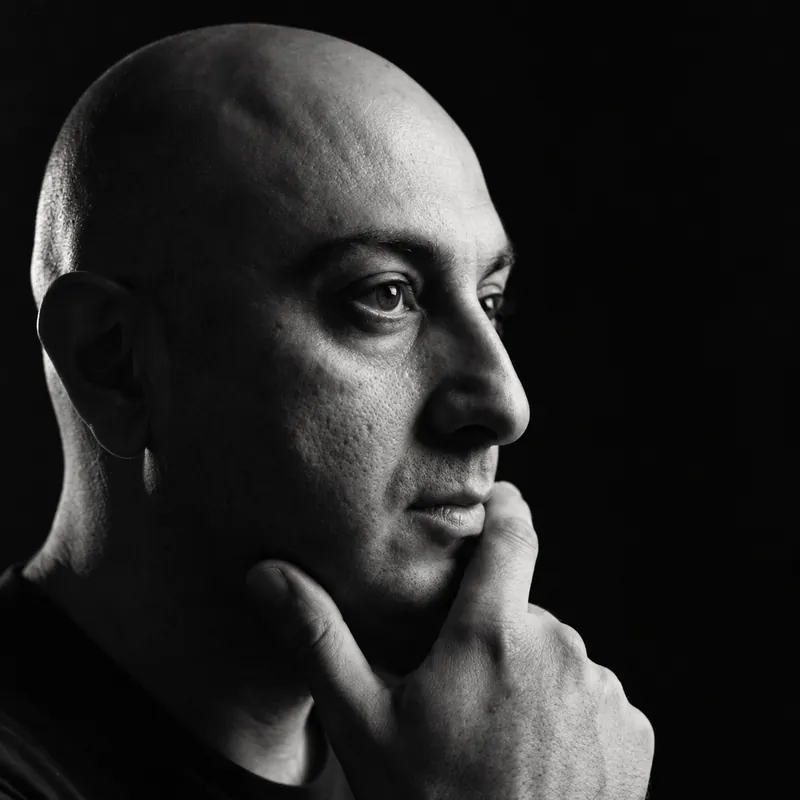
No anonymous team and no hand-off to junior consultants. Nicolas and Mickael conduct the analysis, challenge the evidence and present the priority decisions.
 01
01Nicolas Calandra
Co-founder & CEO · DubaiLeads the journey analysis, structures the observations and turns identified friction into recommendations the client can use.
 02
02Mickael Pluym
Co-founder · FranceStructures the method, weighs market signals against the available evidence, then challenges the conclusions before presentation.
Where we come from
Before advising,
we sold.
ORAKLIS was not born in a consulting firm. We come from the field: e-commerce, content creation, social media and collaborations. That’s where we learned to read what makes people buy, and what drives them away.

E-commerce
Shopify stores built from product page to checkout. You quickly learn that a misplaced detail costs a sale, and a well-placed one wins it.

YouTube
Creating and growing channels. A title, a thumbnail, the first ten seconds: that’s where almost everything is decided.


Social media and collaborations
Content, accounts and collaborations with other creators and brands. What matters isn’t the view: it is what the view triggers.
Today, we apply those reflexes to your sales journey.
Free Decision Diagnostic
What may be
holding your prospects back?
Share your website or profile and your priority. We look at your business like a prospect who doesn’t know you yet. Your review is ready within 72 hours; we then schedule the 30-minute debrief together.
- The 6-point review against your competitor
- Up to 3 documented frictions
- The 3-action plan, and what not to do